






























Mines Game — Play Minefield Free (2026)
The mines game on Gift Club: the full multiplier ladder for all three difficulties, mine counts, pick limits and when cashing out actually makes sense.

Minefield: play the demo
A free demo of the real game: 5 rounds with demo Stars, no sign-up. Then carry on in Telegram.
Demo Stars are not real Stars and cannot be withdrawn.
Play Minefield- Top payout
- 70.96×
- Bet tiers
- 1–100
- Mode
- Stars, or 1 Spark a round
- Category
- Casual
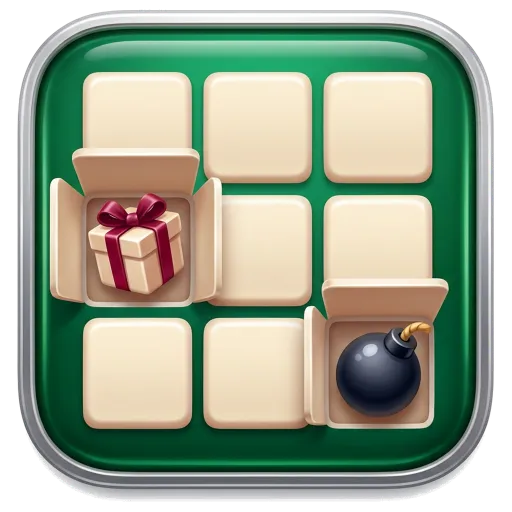
Minefield is the Telegram mines game in its standard form: a 25-tile grid, a known number of hidden mines, and a multiplier that climbs with every safe tile you turn over. The only decision that matters is when to stop. This guide lists the exact multiplier ladder for each difficulty, so you can see what each additional pick is actually worth before you take it.
How to play Minefield
- 1Open Minefield in the Games hubLaunch Gift Club in Telegram, open Games and select Minefield. The grid is always 25 tiles; only the mine count changes.
- 2Pick a difficultyEasy hides 3 mines, Medium hides 5, Hard hides 10. More mines means a steeper multiplier ladder and a shorter one.
- 3Set your stakeSpark mode costs 1 Spark a round and pays XP. Paid mode accepts 1, 5, 10, 20, 50 or 100 Stars, or a Gram (formerly Toncoin) stake from 0.1 to 10. A single win is capped at 10,000 Stars or 1,000.
- 4Turn over a tileTap any tile. A safe tile advances you one rung up the multiplier ladder. A mine ends the round and the stake is lost.
- 5Decide whether to continueAfter every safe tile you can cash out at the current multiplier or keep going. This is the whole game — the tiles are random, the stopping point is yours.
- 6Cash outTap cash out to bank bet × current multiplier. Spark rounds award the XP shown for the number of tiles you cleared.
 0.1 to 10
Minefield payouts
| Tiles cleared | Multiplier | Tiles cleared | Multiplier |
|---|---|---|---|
| 1 | 1.07× | 9 | 3.90× |
| 2 | 1.23× | 10 | 4.80× |
| 3 | 1.41× | 11 | 6.00× |
| 4 | 1.64× | 12 | 7.63× |
| 5 | 1.91× | 13 | 9.93× |
| 6 | 2.25× | 14 | 13.24× |
| 7 | 2.67× | 15 | 18.20× |
| 8 | 3.21× | — | — |
| Tiles cleared | Multiplier | Tiles cleared | Multiplier |
|---|---|---|---|
| 1 | 1.18× | 7 | 5.89× |
| 2 | 1.50× | 8 | 8.15× |
| 3 | 1.91× | 9 | 11.55× |
| 4 | 2.48× | 10 | 16.80× |
| 5 | 3.25× | 11 | 25.21× |
| 6 | 4.34× | 12 | 39.21× |
| Tiles cleared | Multiplier | Chance of getting this far |
|---|---|---|
| 1 | 1.58× | 60.0% |
| 2 | 2.71× | 35.0% |
| 3 | 4.80× | 19.8% |
| 4 | 8.80× | 10.8% |
| 5 | 16.80× | 5.7% |
| 6 | 33.61× | 2.8% |
| 7 | 70.96× | 1.3% |
| Difficulty | First few tiles | Deep clear |
|---|---|---|
| Easy | 1 XP each | up to 20 XP |
| Medium | 1–2 XP each | up to 25 XP |
| Hard | 1–3 XP each | up to 40 XP |
| Currency | Bet tiers | Single-win cap |
|---|---|---|
| Telegram Stars | 5 · 10 · 20 · 50 · 100 | 10,000 |
| Gram | 0.1 · 0.5 · 1 · 2 · 3 · 5 · 10 | 1,000 |
| Spark mode | 1 Spark — pays XP | — |
Minefield pros and cons
Pros
- You choose when to stop, so you set your own risk ceiling rather than picking one from a menu
- The full multiplier ladder is visible in-game before you commit a single tile
- Three difficulties cover very different play styles from the same screen
- Spark mode uses identical grids, so practice transfers exactly
- Accepts Gram as well as Stars
- Provably fair: mine positions are fixed by a pre-committed seed before your first tap
Cons
- Nothing you observe during a round tells you where the mines are — tile choice is pure guesswork
- The steep top rungs on Hard are reached on well under 2% of rounds
- The ladders are cut short to stay under the win cap — 10,000 Stars or 1,000 — so no rung pays past 70.96×
- Easy's shallow early ladder makes small stakes feel slow
Why the ladder gets steeper as you go
The multiplier at each rung is set by how unlikely it is to have got there. On Hard, ten of the twenty-five tiles are mines, so your first pick is safe 60% of the time — and that rung pays 1.58×. By the seventh pick you have survived a sequence that only happens on about 1.3% of rounds, and it pays 70.96×.
The consequence is the thing worth internalising: the expected value of every rung is the same. Stopping at rung one and stopping at rung seven are worth an identical amount on average, because the payout rises at exactly the rate the survival odds fall. Going deeper does not improve your return, it only widens the spread of outcomes.
That makes "when should I cash out?" a question about variance, not value. Cash out early for many small wins; push deep for rare large ones. There is no rung that is mathematically the right one.
Which difficulty should you play?
- Easy (3 mines) — 88% of first picks are safe. Fifteen rungs available, topping out at 18.20×. The mode to use if you want rounds that usually go somewhere.
- Medium (5 mines) — the balanced option. Twelve rungs, up to 39.21×, with a survival curve that stays reasonable through the first five or six picks.
- Hard (10 mines) — 40% of rounds end on the first tap. In exchange the ladder reaches 70.96× in only seven picks. High variance, and honest about it.
Common mistakes
- Tile patterns. Corners, edges, a diagonal, the same five tiles every round — none of it matters. The mines are placed before your first tap from a seed that has nothing to do with which tile you press. Mines strategy works through the odds, and the one rounding effect that does exist. If you want the numbered-tile puzzle this grid borrows from, that is classic Minesweeper.
- "I'm due." Rounds are independent. Four fast losses do not make the fifth round safer.
- Moving the target mid-round. Deciding to stop at 5× and then continuing because it "feels safe" is how a planned session becomes an unplanned one. Pick the rung before you start.
- Ignoring the win cap. Single wins are capped at 10,000 Stars. At a 100-Star stake anything above 100× is truncated — on Hard the top rung already pays 7,096, so the cap is close. Gram wins are capped at 1,000, which at the top 10-GRAM stake is also 100×; there the Hard top rung pays 709.6.
Minefield versus Mines Tower
Mines Tower runs the same idea on a different shape: instead of one 25-tile grid you climb levels of five boxes, picking one box per level. The ladder is shorter and much steeper — Hard tops out at 92.77× in five levels. Minefield gives you more rungs and finer control over where you stop; Mines Tower gets to big multipliers faster.
If you would rather play against another person than against the house, PvP Minefield puts the Easy board between two players who take turns opening tiles. There is no ladder and no cash-out: the first player to open a mine loses the pot.
Is Minefield provably fair?
Yes. Mine positions are derived from a server seed, your client seed and a round nonce, and the hash of the server seed is published before the round starts. Once the round ends the seed is revealed and you can recompute the layout to confirm it matches the commitment. Crucially, the mines are fixed before your first tap — the game cannot move a mine under a tile you are about to press.
As with every paid game here, verifiable fairness is a statement about tampering, not about the odds. The ladder above is the whole offer, and it is priced with a margin for the house.
Minefield FAQ
What is the highest multiplier in Minefield?
70.96×, reached by clearing seven safe tiles on Hard difficulty (10 mines). That sequence occurs on roughly 1.3% of Hard rounds. Easy tops out at 18.20× after 15 tiles and Medium at 39.21× after 12.
When is the best time to cash out in Minefield?
There is no mathematically best rung. Each multiplier is set to exactly offset the odds of reaching it, so the expected value of stopping is the same everywhere on the ladder. Cashing out early gives frequent small wins, going deep gives rare large ones — pick the variance you want and decide the rung before the round starts.
Does it matter which tiles I pick?
No. Mine positions are fixed by a pre-committed seed before your first tap, and they are independent of which tiles you choose. Corner strategies, diagonals and fixed patterns have no effect on the outcome.
How many mines are on the Minefield grid?
The grid is always 25 tiles. Easy hides 3 mines, Medium hides 5 and Hard hides 10. Pick limits are 15, 12 and 7 respectively.
Can I play Minefield for free on Telegram?
Yes, with free Sparks: your daily streak pays plenty of them. Spark mode uses the same grids and mine counts but pays XP instead of Stars — up to 20 XP on Easy, 25 on Medium and 40 on Hard for a deep clear. It is the sensible place to get a feel for the survival curve. Each Spark round costs 1 Spark, and Sparks come from the daily streak claim.
Is there a maximum win in Minefield?
Yes, a single round pays at most 10,000 Stars. At the 100-Star bet tier that ceiling is reached at 100×, which matters mostly on Hard where the top rung already pays 7,096 Stars. A Gram round pays at most 1,000, which is also 100× at the 10-GRAM tier, where the Hard top rung pays 709.6.
Can I bet Gram on Minefield?
Yes. Minefield accepts Gram stakes from 0.1 to 10 alongside the 1 to 100 Star tiers. A Gram round pays Gram at the same multipliers, and a single Gram win is capped at 1,000.
Play within your limits. Paid rounds cost Telegram Stars or Gram, and every game on Gift Club is built so the house keeps a margin — over enough rounds the maths runs against you, by design. Stars cannot be converted back into money. Treat paid play as entertainment you have budgeted for, set a limit before you start, and play Spark rounds whenever you just want to play. Gift Club is 18+.
 Spark round
Ready to play Minefield?
Opens straight into the game inside Telegram. No download, no signup.
Play MinefieldIn-app Stars can't be redeemed or withdrawn. 18+.