













Slots Demo — Play Gifts of Zeus Free (September 2026)
A free slots demo in the browser: Gifts of Zeus, a 5×5 tumbling grid with free spins. Full paytable, Low/Medium/High risk, the real 95% RTP and the 100× cap.

Slots: play the demo
A free demo of the real game: 15 spins with demo Stars, no sign-up. Then carry on in Telegram.
Demo Stars are not real Stars and cannot be withdrawn.
- Top payout
- 100×
- Bet tiers
- 5–100
- Mode
- Stars, or 1 Spark free
- Category
- Probability
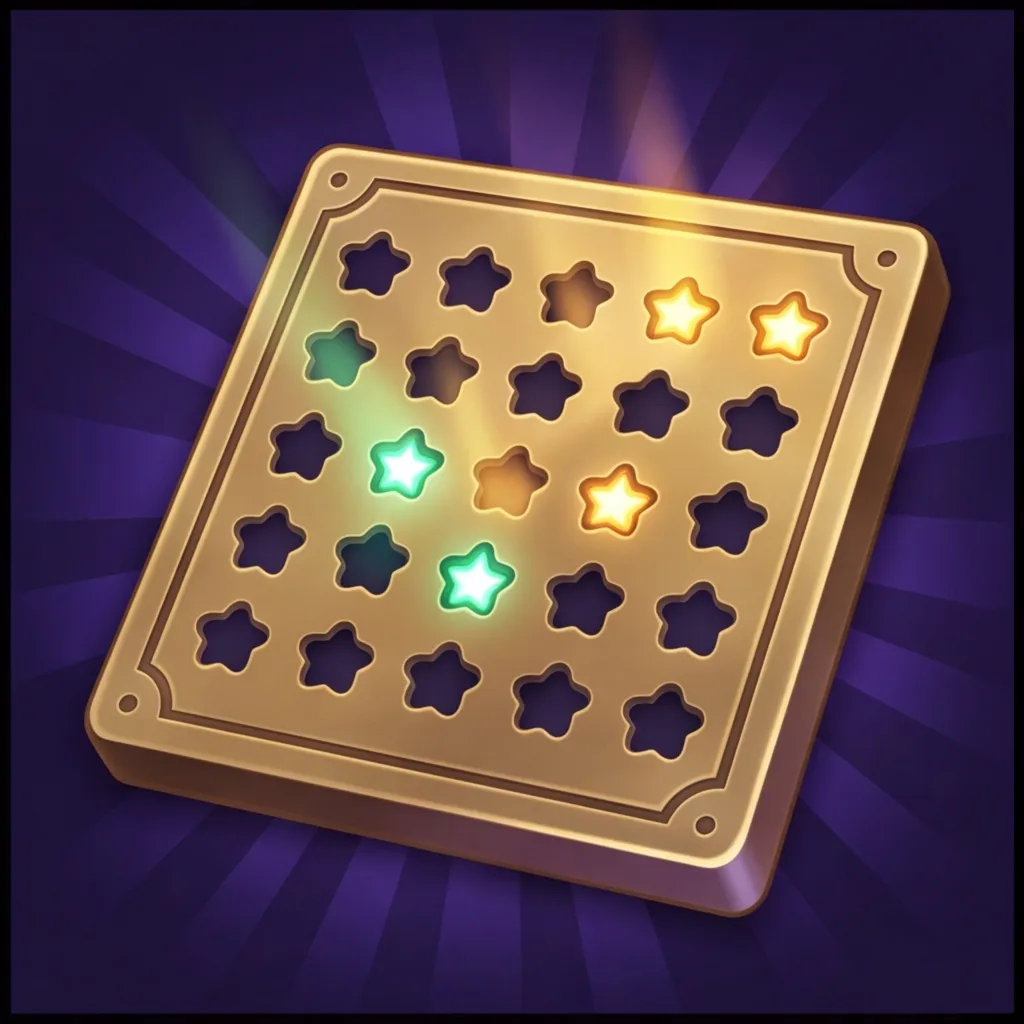
This is a slots demo you can actually play — the real game, running in the panel above on demo Stars, with no account and nothing to install. It is Gifts of Zeus: a 5×5 grid that pays anywhere rather than on paylines, where winning symbols clear and fall away instead of just lighting up. Everything below is read out of the code that resolves the spins, including the parts most slot pages leave vague.
How to play Slots
- 1Play the demo aboveThe panel at the top of this page is the game itself, with a fake in-browser backend. It plays 15 spins on demo Stars and then offers you the real thing.
- 2Set your stakeIn the app, a spin costs 5, 10, 20, 50 or 100 Telegram Stars. There is also a free mode that pays XP instead, and TON tiers from 0.1 upwards.
- 3Pick a risk levelIn Stars play you choose Low, Medium or High. All three return 95% and stop at 100× the stake; the level decides how much of that return comes from ordinary spins and how much from free spins. High is the default, and it is what the demo plays.
- 4Spin the grid25 symbols drop onto a 5 by 5 board. There are no paylines: position does not matter, only how many of one symbol land.
- 5Count the matches7 or more of the same symbol anywhere on the board is a win. The rail under the board counts every symbol for you as the grid settles.
- 6Watch the tumbleWinners clear, the symbols above fall into the gaps and new ones drop in from the top. If that makes another 7 of a kind, it pays again at a higher multiplier.
- 7Collect free spins on 3 Gifts3 or more Gift symbols on the first grid open free spins — 10 on High, 7 on Medium, 5 on Low — and there the multiplier climbs with every tumble and never resets until they run out.
Slots payouts
| Symbol | 7–8 | 9–10 | 11+ | Chance per cell |
|---|---|---|---|---|
| Temple | 4× | 12× | 40× | 5.05% |
| Laurel crown | 2× | 6× | 20× | 7.07% |
| Thunderbolt | 1× | 4× | 10× | 9.09% |
| Moon | 0.8× | 2× | 6× | 10.1% |
| Topaz | 0.4× | 1× | 3× | 15.15% |
| Emerald | 0.4× | 1× | 3× | 16.16% |
| Sapphire | 0.2× | 0.6× | 2× | 17.17% |
| Ruby | 0.2× | 0.6× | 2× | 18.18% |
| Gift (scatter) | — | — | — | 2.02% |
| Tumble | 1st | 2nd | 3rd | 4th | 5th | 6th | 7th+ |
|---|---|---|---|---|---|---|---|
| Multiplier | 1× | 2× | 3× | 5× | 8× | 12× | 20× |
| Property | Value |
|---|---|
| Gifts needed to trigger | 3 on the first grid |
| Free spins awarded | 10 |
| Extra spins per additional Gift | 2, counted up to 5 Gifts |
| Most free spins from one trigger | 14 |
| Starting multiplier | 1× |
| Multiplier growth | +1× per tumble, never resets |
| How often it triggers | About once in 74 spins |
| Low | Medium | High (default) | |
|---|---|---|---|
| Tumble ladder | 1, 2, 3, 4, 5, 6, 8× | 1, 2, 3, 4, 6, 9, 14× | 1, 2, 3, 5, 8, 12, 20× |
| Ladder top step | 8× | 14× | 20× |
| Free spins per trigger | 5, +1 per extra Gift | 7, +1 per extra Gift | 10, +2 per extra Gift |
| Hit rate | 52.6% | 49.5% | 44.2% |
| Free spins trigger | About 1 spin in 74 | About 1 spin in 75 | About 1 spin in 74 |
| Return from ordinary spins | About 83 points | About 78 points | About 70 points |
| Return from free spins | About 12 points | About 17 points | About 25 points |
| Median 30-round session | −22 Stars | −29 Stars | −39 Stars |
| Sessions that finish ahead | 37% | 35% | 33% |
| Worst 10% of sessions | −81 Stars or worse | −89 Stars or worse | −100 Stars or worse |
| 100× cap reached | About 1 round in 130,000 | About 1 round in 30,000 | About 1 round in 8,500 |
| Pays that differ from the table above | Moon 7–8 pays 1×, Temple 7–8 pays 5× | Temple 7–8 pays 5× | None — it is that table |
| Property | Value |
|---|---|
| Stars per spin | 5, 10, 20, 50 or 100 |
| TON per spin | 0.1, 0.5, 1, 2, 3, 5 or 10 |
| Maximum win | 100× your stake |
| Hard payout cap | 10,000 Stars |
| Free mode | Always Low risk; pays 1 to 20 XP by result, no Stars |
| RTP | 95%, the same at every stake and every risk level |
| Hit rate | 44.2% of spins pay something on High, the default |
Slots pros and cons
Pros
- Pays anywhere on the grid, so there are no paylines to misread
- A Low / Medium / High risk selector: the same 95% RTP and 100× ceiling, delivered calmer or swingier
- 44.2% of spins pay something on High and 52.6% on Low, and the 100× ceiling is the same at every stake
- Free spins carry about a quarter of the whole return on High, and their multiplier never resets at any level
- The rail under the board counts every symbol live, so a near miss is visible rather than implied
- Provably fair: the whole spin, free spins included, is fixed by a committed seed before the stake is taken
- A free XP mode and a playable demo, so the game can be learned at zero cost
Cons
- Free spins trigger about once in 74 spins, and on High, the default, a quarter of the return is locked behind them
- 55.8% of spins pay nothing at all on High, and even Low leaves most short sessions behind
- Wins stop at 100× the stake: on High about 1 round in 8,500 hits the ceiling and is cut to it
- Only one skin so far, so the look never changes — only the risk level does
What a slots demo can and cannot tell you
A demo shows you the pace, the art, how often something happens and what a tumble chain feels like. It cannot show you the distribution, because 15 spins is nowhere near enough. The demo plays High, the default risk level: at its 44.2% hit rate you will land 6 or 7 paying spins, and the odds of catching a free-spin trigger in that window are roughly 1 in 5.
That gap is the whole reason the rest of this page exists. The demo above is the game, but the numbers below are the game as well — and only one of the two is a fair sample.
Seven of a kind, anywhere
Most slots pay on lines: a symbol counts only if it lands on the right cell of the right row. Gifts of Zeus pays on the count. 25 symbols land, and any symbol that appears 7 or more times pays, wherever the copies are.
That makes the maths unusually legible. Each cell draws independently from the weights in the table above, so the chance of a given symbol paying is just the chance of 7 or more successes in 25 draws. Ruby lands on 18.18% of cells and so shows up 7+ times fairly often, which is why it pays the least; the Temple lands on 5.05% and almost never reaches 7, which is why it pays 40× at 11 or more.
Two symbols can pay on the same grid. They are counted separately and both clear, so a grid holding 7 Rubies and 9 Emeralds pays 0.2× and 1× and removes 16 cells at once — which usually sets up a long tumble.
Where the money actually comes from
The target return is 95% at every risk level. On High — the default, and what the demo plays — the simulation that guards it breaks the return down in a way worth reading before you decide whether you like this game:
- About 70 points of the return come from ordinary spins — the base grid and its tumbles.
- About 25 points come from free spins, which trigger about once in 74 spins.
So on High roughly a quarter of everything this game pays back is held behind an event that happens on 1.35% of spins. That is a design choice, not an accident, and it is the single most useful fact on this page: a session that never triggers free spins is running at about 70% return, and a session that triggers two is running well above 100%. The 95% is the average of those two very different experiences, not a description of either. Medium and Low move part of that quarter back onto ordinary spins; the figures are in the section on risk levels below.
The same structure sits behind every modern slot with a bonus round. It is rarely stated, so it is worth stating: the headline RTP of a game with a bonus is not the RTP of playing it without hitting the bonus.
The tumble ladder, and why it matters more than the paytable
When a win clears, the symbols above drop down and new ones fill the top. If the new grid holds another 7 of a kind, it pays again — on High at 2×, then 3×, 5×, 8×, 12×, and 20× from the seventh tumble on.
Most spins end quickly. In the High simulation, 56.8% of base spins produced no win at all, 23.6% tumbled once, 10.8% twice, and only 0.1% reached seven tumbles or more. But because the ladder multiplies, that thin tail carries a lot of the return — a Temple paying 40× on a sixth tumble would be 480× the stake from one grid, which is exactly the kind of spin the 100× ceiling cuts short.
Free spins: the multiplier that never resets
On High, 3 Gifts on the first grid award 10 free spins. A fourth Gift adds 2 more and a fifth adds 2 again, so the most one trigger can give is 14. Gifts do not pay anything themselves; they only open the round.
Inside free spins the ladder works differently, and this is the part worth understanding. The multiplier starts at 1× and rises by one with every tumble — but it does not reset between spins. Tumble three times on your first free spin and the second begins at 4×. By the tenth free spin of an active round the multiplier is routinely in the teens, which is why the average triggered bonus on High pays 18.7× the stake in the simulation.
It also means free spins are front-loaded with variance in the opposite direction from what you would expect: the early spins are nearly worthless and the late ones carry everything. Leaving a bonus round half-played would throw away most of it — which is why the game resolves the whole thing server-side before the first grid even drops.
Low, Medium or High: what the risk level changes
In Stars play there is a Low / Medium / High selector beside the stake. It does not change the return. All three levels are 95%, all three stop at 100× the stake, and the 5×5 grid, the 7-of-a-kind rule, the 7 / 9 / 11 pay columns and the 3-Gift trigger are identical. High is the default, it is the game every other section of this page describes, and it is what the demo above plays.
What moves is where the 95% sits. High keeps about 25 points of it in free spins; Medium keeps about 17 and Low about 12, and pays the rest — about 78 and 83 points — on ordinary spins. Three things do that:
- A flatter ladder. Medium climbs 1, 2, 3, 4, 6, 9, 14× and Low 1, 2, 3, 4, 5, 6, 8×, against a 20× top step on High.
- Shorter free spins. 7 on Medium and 5 on Low, with 1 extra per additional Gift rather than 2. The rule inside them is the same at every level: the multiplier starts at 1×, gains 1 per tumble and never resets.
- More small hits. The symbol weights lean towards the cheap symbols — slightly on Medium, further on Low — so 49.5% and 52.6% of spins pay something. On both, the Temple pays 5× rather than 4× at 7 of a kind, and on Low the Moon pays 1× rather than 0.8×.
Here is what that does to a session. Over 30 rounds at a 5-Star stake — 150 Stars staked — the simulated median session ends 39 Stars down on High, 29 down on Medium and 22 down on Low. 33%, 35% and 37% of sessions finish ahead, and the worst tenth of sessions lose 100, 89 and 81 Stars or more. The average is about 7.5 Stars down at every level, because that is the 5% edge and the risk level does not touch it.
Read those figures honestly. Low is calmer, not cheap: it is still a slot, and most short sessions on it still lose more than 5%, because at every level the median sits well below the average — the average is held up by rare big rounds most sessions never see. Risk changes how the same 95% is delivered, not how much of it there is.
The practical details: free (Sparks) rounds always play Low, and the selector unlocks in Stars play. Your pick is remembered between visits. It cannot be changed while a spin is resolving or during free spins. And each level is its own frozen, versioned rule set, so verifying a round replays it under the version it was played at — a later retune cannot make an old round fail its own check.
The 100× ceiling, and how often it bites
One round — the spin, its tumbles and any free spins it opens — pays at most 100× the stake. There is also a hard cap of 10,000 Stars on any single payout, and at the top 100-Star tier the two are the same number, so whichever stake you play, the ceiling is 100× and the return is the same.
This ceiling is not decorative. On High, about 1 round in 8,500 would have paid more and is cut to 100× — in two million simulated rounds, 227 were. The flatter ladders get there far less often: about 1 round in 30,000 on Medium and 1 in 130,000 on Low. The 95% RTP already counts the cut at every level, so it is the return you actually get, not a figure the cap quietly shaves afterwards.
A lower ceiling is a trade: it gives up rare headline wins and spends that return on the ordinary pays instead — the Thunderbolt pays 4× at 9 of a kind for exactly that reason. A slots page that leads with its max win is telling you about its marketing; this one is telling you where the maths stops.
Is it provably fair?
Yes, and the commitment covers the entire round rather than just the first grid. Before you spin, the server has published the hash of a seed. Every symbol of the base grid, every refill, the free-spin trigger and all the free spins — 10 to 14 on High — are derived from that seed in one pass, before your stake is taken. Afterwards the seed can be revealed and the whole sequence recomputed from it — including whether the bonus should have opened. The risk level is part of that replay: a round is checked under the rule set version it was played at. You can check one yourself with the provably fair checker.
The demo on this page is the one exception, and deliberately so: it draws from your browser's own random number generator, has no server seed, and so hides the fairness shield rather than showing you seeds that prove nothing.
Free mode, and what it is for
The same grid and the same rules, paid in XP instead of Stars — and always at Low risk, so free rounds get the flatter ladder and the shorter free spins described above. A losing spin pays nothing, a spin that returns less than the stake pays 1 XP, and it rises in bands to 20 XP for anything over 20×. XP does not convert to Stars and does not change your odds; it moves your level, which is what unlocks things elsewhere in the app.
If you want to learn the game, free mode is a much better sample than the demo above, because it has no round limit.
Slots FAQ
Can I play this slots demo without signing up?
Yes. The panel at the top of this page is the real game with a fake in-browser backend. It gives you demo Stars, plays 15 spins and needs no account, no download and no deposit. Nothing you do in it reaches a server.
What is the RTP of Gifts of Zeus?
95%, and the same at every stake and every risk level. On High, the default, 40 million simulated rounds of the same code that runs the game measure 95.0–95.1%, with about 70 points coming from ordinary spins and about 25 from free spins; Medium and Low move more of the same return onto ordinary spins. A single run of two million moves a few tenths of a point either way because of the free-spin tail — one seeded run measured 94.599% — which is why the test allows a band rather than an exact value.
How often do the free spins trigger?
About once in 74 spins. It needs 3 or more Gift symbols on the first grid of a spin, and the Gift lands on 2.02% of cells. On High, the default, one trigger gives 10 free spins, plus 2 more for a fourth Gift and 2 for a fifth, to a maximum of 14. Medium gives 7 and Low gives 5, each plus 1 per extra Gift.
How many symbols do I need to win?
7 of the same symbol, anywhere on the 25 cells — there are no paylines. 9 of a kind moves you to the middle pay column and 11 or more to the top one. On High, the default, a Temple pays 4× at 7 and 40× at 11.
What is the maximum win?
100× your stake for one round, free spins included. There is also a hard cap of 10,000 Stars on any single payout, which is exactly 100× at the top 100-Star tier, so the two ceilings agree at every stake. The ceiling is reachable: on High about 1 round in 8,500 hits it and is paid 100×, on Medium about 1 in 30,000 and on Low about 1 in 130,000.
Which risk level should I pick?
The return is the same 95% on all three, so pick by the kind of session you want. Low pays something on 52.6% of spins and keeps most of the return on ordinary spins, so a balance lasts longer and swings less. High holds about a quarter of the return in its 10-spin free-spin rounds and a 20× ladder, so it is where the big rounds are — and where a session without a bonus hurts most. Medium sits between them. No level beats the 5% edge, most short sessions finish behind on all three, and free rounds always play Low.
Can I play slots for Telegram Stars or TON?
Both. Stars tiers are 5, 10, 20, 50 and 100 per spin, and TON tiers run from 0.1 to 10. There is also a free mode that pays 1 to 20 XP instead of currency.
Play within your limits. Paid rounds cost Telegram Stars and every game on Gift Club is built so the house keeps a margin — over enough rounds the maths runs against you, by design. Stars cannot be converted back into money. Treat paid play as entertainment you have budgeted for, set a limit before you start, and play free rounds with Sparks whenever you just want to play. Gift Club is 18+.
More game guides
Plinko Gold
An 8-row Plinko board with two bonus pegs. Hit one and a free golden ball drops at the same stake.
Keno
Mark up to five tiles, the house draws ten of forty. Pick count is the volatility dial.
Balloon Pump
Pump a balloon for a rising multiplier. The first pump holds 95% of the time, the rest a little less — cash out before it bursts.