The Advent Calendar Game: Why 24 Doors Still Work
The advent calendar is the most effective daily-reward mechanic ever designed, and the digital versions mostly ruin it. What makes the format work, why apps feel worse than cardboard, and how to build one people finish.
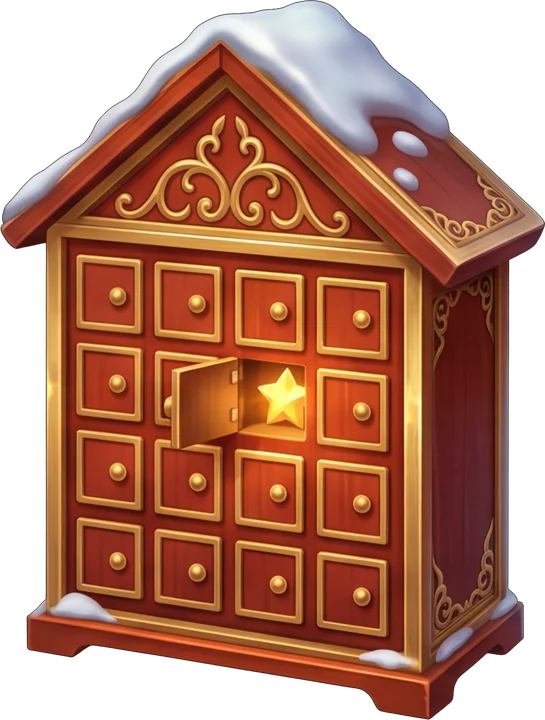
The advent calendar is the most effective daily-reward mechanic anyone has ever designed, and it was invented by a German printer in the nineteenth century with no intention of designing anything. Twenty-four doors, one a day, a reward behind each that is worth almost nothing. People finish it. Every game studio that has tried to build a login-reward system has been trying to reproduce this, and most of them have made something worse.
Why the format works
It is worth being precise about this, because the reasons are not the obvious ones. The chocolate is not why anyone opens door fourteen.
- The schedule is external. You cannot open tomorrow's door today. That single constraint is the whole engine: the calendar decides when, not you, so there is nothing to optimise and no way to get ahead.
- The reward is the opening. The thing behind the door is a token. What you actually get is a small, reliable moment of anticipation at a fixed time of day — which is precisely why a calendar full of identical chocolates works at all.
- The streak is visible. Fourteen open doors and ten closed ones is a progress bar you cannot argue with. You can see what you have done and exactly how much is left.
- It ends. Twenty-four days and it is over, with a finish line everyone knows the date of. Endless daily-reward systems have no equivalent, which is why people drift out of them rather than completing them.
- There is no skill. Nobody is better at advent calendars than anybody else, so nobody can fall behind and feel bad about it.
Why the digital ones feel worse
Almost every app version of this is a downgrade, and the reasons are specific and fixable rather than mysterious.
The first is that the door stops being a door. Physically, opening one is an irreversible act with a small sound and a torn edge; on a screen it is a tap that produces a modal. The second is that digital calendars cheat on the schedule — they let you catch up on missed days, or they unlock several at once if you have been away, and in doing so they destroy the only rule that made the format work. The third is what is behind the door. A physical calendar gives you a real object, however small. A digital one very often gives you a discount code, which is not a gift, because it asks you for money.
The fourth is the shape of the rewards. Most digital calendars back-load everything into day 24, which is exactly backwards: it tells you that the first twenty-three days were filler, and the honest response to being told that is to come back on the 24th. A calendar people finish has something worth having on day 3 and day 11 and day 19.
The four kinds that actually exist
- Chocolate. The default, and the one that proves the reward is not the point.
- Product samples. Beauty, coffee, spirits, hot sauce. The commercially dominant kind now, because the samples cost the brand very little and the calendar sells at a premium.
- Hobby calendars. Lego, puzzles, models, seeds. The ones people photograph, because each day produces something that persists — which is the closest a calendar gets to being a game.
- Homemade. Twenty-four envelopes and a plan. Almost always the best one, because the person who made it knows the recipient.
How to build one people finish
- Twenty-four doors, starting 1 December. Not thirty-one, not twelve. The number is part of the format's recognisability and people know where they are in it without counting.
- Distribute the good days. Three or four standouts spread across the month, not one at the end. Days 1, 3 and 24 being the only real ones is the most common mistake.
- Never put a coupon behind a door. A discount is a request, not a reward, and one of them teaches the reader that the rest are adverts too.
- Keep the daily items genuinely small. The format's economics depend on twenty-four cheap things, and trying to make every day substantial produces an expensive calendar that nobody can afford to repeat next year.
- Do not allow catch-up. Missing a day has to cost something, or the schedule stops meaning anything. This is the rule that digital versions break first and should break last.
Running one for a community
For a channel or group, the mechanic transfers well: one post a day for twenty-four days, something small behind each. Two warnings from the same place as everything else in this area. Do not gate the doors behind a purchase, because a paid entry plus a chance-decided reward is a lottery in most jurisdictions — that boundary is covered in new year giveaway ideas. And decide the whole twenty-four days before you post day one; calendars improvised from day eight run out of ideas by day fifteen and quietly stop, which is worse than never starting.
What we have, and what we do not
Since this is our site, the direct answer: Gift Club does not have an advent calendar. What it has is daily quests — tasks that reset each day, of the "play N rounds" kind, which is a different mechanic with a different purpose. Quests reward activity you were going to do anyway; an advent calendar rewards showing up on a schedule. The second is better at building a habit and we do not currently run one.
If that changes, this page will say so and will name the mechanic rather than hinting at it. In the meantime, what the app actually offers is on the RTP index and the individual game guides, and the promotions that do exist are explained in promotions and returns above 100%.
FAQ
When does an advent calendar start? 1 December, and the commercial format runs twenty-four days to Christmas Eve. Liturgical Advent begins on a different date each year — the fourth Sunday before Christmas — which is why the calendar you buy and the season it is named after do not quite line up.
Why 24 doors and not 25? Because the original counted the days of waiting, and the waiting ends on Christmas Eve. Some calendars add a twenty-fifth door; most do not, and the ones that do usually put the best item there and thereby make the first twenty-four feel like a queue.
Are advent calendar games just loot boxes? No, and the difference is the schedule. A loot box lets you open as many as you can pay for; a calendar allows exactly one per day and costs nothing per door. Remove the schedule and add a price and you have converted one into the other, which is exactly what the worst digital versions do.
Can you make one for an adult? That is most of the market now — spirits, coffee, beauty and hobby calendars are all aimed at adults. The format has no age attached to it; only the contents do.
Keep reading
- Christmas Games Online — the other seasonal formats, and which ones hold up.
- New Year Giveaway Ideas — running a daily or countdown draw without turning it into a lottery.
- Mystery Box Games — what happens to the same anticipation mechanic once money is attached.
Ready to start earning?
Open Gift Club in Telegram and put these methods to work.
Play Gift Club