





























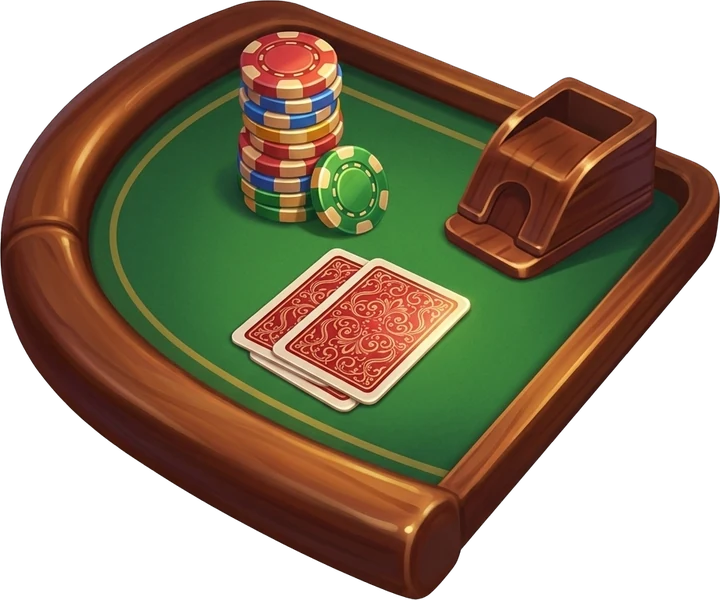
Blackjack is a card game against the dealer, and the goal is to beat the dealer's hand without going over 21. You and the dealer each get two cards; you choose to hit (take a card), stand, double, split or, at some tables, surrender, and then the dealer plays by fixed rules. A hand closer to 21 than the dealer's wins, going over 21 (busting) loses at once, and a tie is a push. A blackjack, an ace plus a ten-value card on the deal, usually pays 3 to 2.
Blackjack rules at a glance (October 2026)
| Rule | Standard blackjack |
|---|---|
| Goal | Get closer to 21 than the dealer without going over |
| Card values | 2 to 10 face value, J Q K = 10, ace = 1 or 11 |
| The deal | Two cards to you, two to the dealer, one of them face down |
| Your choices | Hit, stand, double, split, sometimes insurance or surrender |
| Dealer | Draws to 16 and stands on 17 or more; some tables hit soft 17 |
| Win pays | 1 to 1; blackjack pays 3 to 2 (6 to 5 at some tables) |
| Tie | Push: your stake comes back |
What are the card values in blackjack?
Cards from 2 to 10 count their number. Jacks, queens and kings count 10. An ace counts 11 unless that would bust the hand, in which case it counts 1. A hand with an ace counted as 11 is a soft hand, such as soft 17 (ace and 6); every other hand is hard.
How is blackjack dealt?
You place a stake, then you and the dealer each receive two cards. Both of yours are face up, and the dealer shows one card and keeps the other face down, the hole card. Games use one to eight decks. When the dealer's up card is an ace or a ten-value card, many casinos have the dealer peek at the hole card, and a dealer blackjack ends the hand at once.
A two-card 21 is a blackjack, or natural. It beats any other 21, and it pays more than a normal win. If both you and the dealer have one, it is a push.
What can you do on your turn?
| Move | What it does |
|---|---|
| Hit | Take another card. You can hit as often as you like until you stand or bust. |
| Stand | Keep your hand and end your turn. |
| Double down | Double your stake, take exactly one more card, then stand. Usually allowed only on your first two cards, and some tables limit it to 9, 10 or 11. |
| Split | With two cards of the same value, make a second stake equal to the first and play each card as its own hand. Split aces usually get one card each. |
| Insurance | When the dealer shows an ace, a side bet of up to half your stake that the hole card is a ten-value card. It pays 2 to 1. |
| Surrender | At some tables you can give up your hand for half your stake back, before you play it (late surrender, after the dealer checks for blackjack). |
Which of these is best depends on your hand and the dealer's up card, and that is what basic strategy settles. Our blackjack strategy chart shows the right move for every hand, and when to split in blackjack covers pairs.
How does the dealer play?
The dealer has no choices. After every player has finished, the dealer turns over the hole card and draws until the hand totals 17 or more. If the dealer busts, every hand still in play wins.
The one rule that varies is soft 17. At S17 tables the dealer stands on soft 17, and at H17 tables the dealer hits it. H17 gives the casino a small extra edge, so tables that stand on soft 17 are better for the player.
How much does blackjack pay?
| Result | Payout on a 10-unit stake |
|---|---|
| Win | 1 to 1: you get 10 back plus your stake |
| Blackjack, 3 to 2 | 15 won |
| Blackjack, 6 to 5 | 12 won |
| Push | Your 10 back, nothing won or lost |
| Bust or lower than the dealer | The stake is lost |
The 3 to 2 pay is the standard, and 6 to 5 is the one rule worth refusing: it takes 0.3 of a stake from every blackjack. For what each rule costs the player, see our blackjack house edge article, which puts the edge on Gift Club's rules at 0.85% with basic strategy.
How do you play blackjack on Gift Club?
The Blackjack guide has the full table. Gift Club's blackjack uses six decks, pays 3 to 2 and has the dealer hit soft 17. You can double on 9, 10 or 11 only, there is no double after a split, you can split once, split aces get one card each, and there is no insurance or surrender. You can play with Stars or in a Spark round, which shows the best move as a hint. The app is in English.

Blackjack rules: common questions
What is a blackjack in blackjack?
An ace and a ten-value card as your first two cards. It beats a 21 made of three or more cards and pays 3 to 2 at a standard table.
Does the dealer have to hit on 16?
Yes. The dealer draws on 16 or less and stands on 17 or more. Some tables also hit a soft 17.
What is a push in blackjack?
A tie with the dealer: your stake is returned and you neither win nor lose.
When can you double down?
Usually on your first two cards, for one more card. Some tables allow it only on a hard 9, 10 or 11, and some forbid it after a split.
Should you ever take insurance?
Basic strategy advises against it. Insurance is a separate side bet on the dealer's hole card, not part of the hand itself.
Sources
 Spark round
Try it in Telegram
Open Gift Club, claim your Sparks and play a Spark round before you stake anything.
Play Gift ClubIn-app Stars can't be redeemed or withdrawn. 18+.
Keep reading
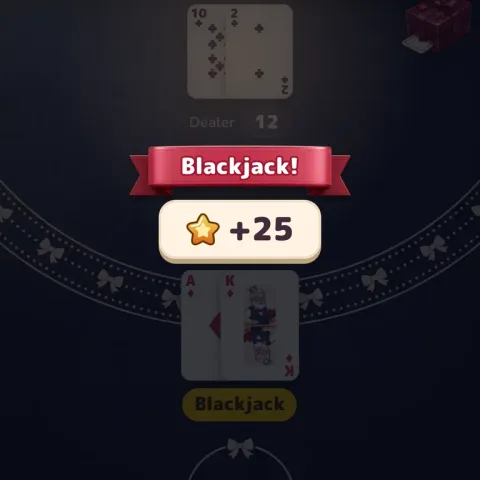
Blackjack House Edge: Why 99.15% Isn't 100%
Blackjack's house edge on Gift Club's rules is 0.85%, a 99.15% RTP with basic strategy. See what 3:2, 6:5, dealer hits soft 17 and no double after split cost.
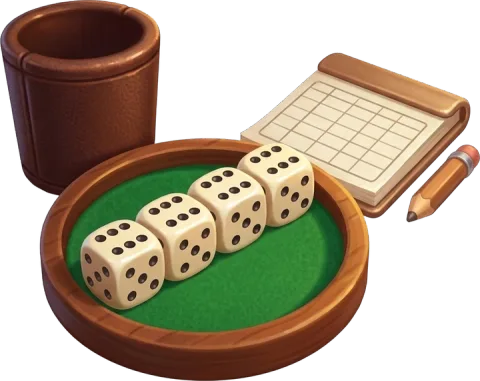
Generala Rules: How to Play the Latin American Dice Game
Generala rules in full: five dice, three throws, escalera, full, póker and generala, the servida bonus, the instant win, and how it differs from Yahtzee.
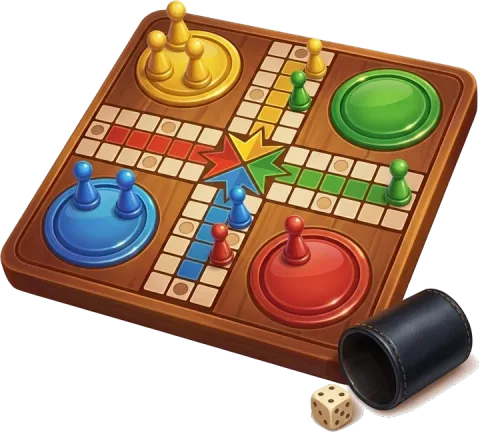
Parchís Rules: How to Play Spain's Version of Ludo
Parchís rules in full: a 5 to leave jail, safe squares, barriers, a 6 counting 7, capturing for 20, reaching home for 10, and the two-dice online version.
Checkers Rules: How to Play and How Draughts Variants Differ
Checkers rules in full: setup, moves, forced jumps, kings and how to win, then how international, Russian, Brazilian, Spanish, Italian and Turkish differ.